
Send a short request
Tell us the city and whether you need support near the shower, toilet or another spot. Attach room photos in the request form above.
Senior home safety & aging in place service
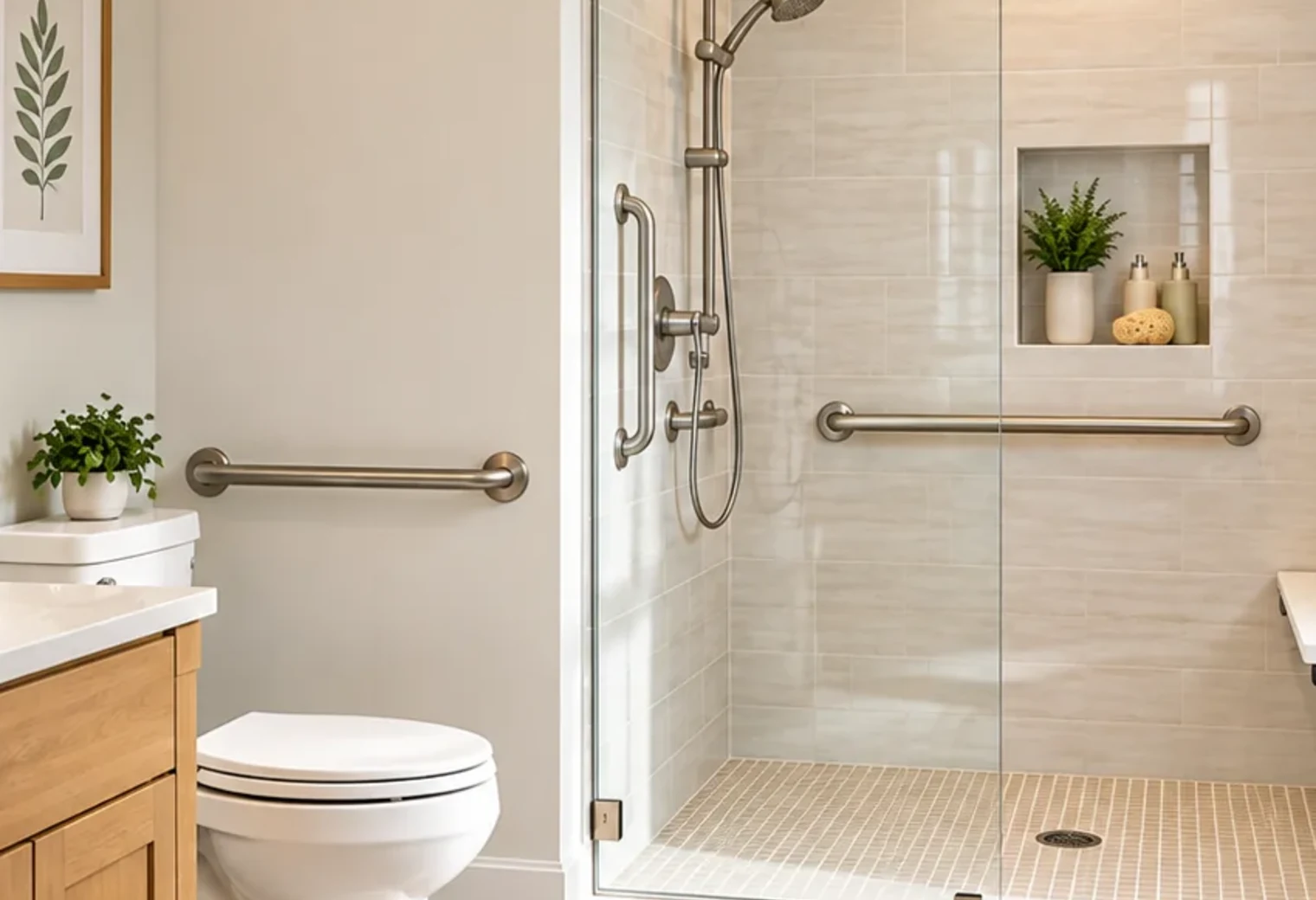
Stepping into the shower, getting up from the toilet, turning to reach a towel: a fixed grab bar gives you something solid to hold. Tell us where, and we’ll suggest a simple first step.
Clear service scope
Starting at $295 for one standard fixed bar, supplied and installed under standard mounting conditions. Each additional compatible bar in the same visit: $175.
What the installation includes
A quote for your bathroom
The first standard fixed bar starts at $295; each additional compatible bar during the same visit is $175. Special drilling, missing backing and other site conditions are quoted separately before booking.
Already have an occupational therapist’s placement recommendation? Share it with us so the installation can follow that guidance.
Why this service
Sometimes it is one small part of the day that starts to feel less comfortable: stepping over the shower edge, turning to reach a towel or getting up from the toilet. A fixed grab bar gives you a dedicated place to hold on, without changing the bathroom you know.
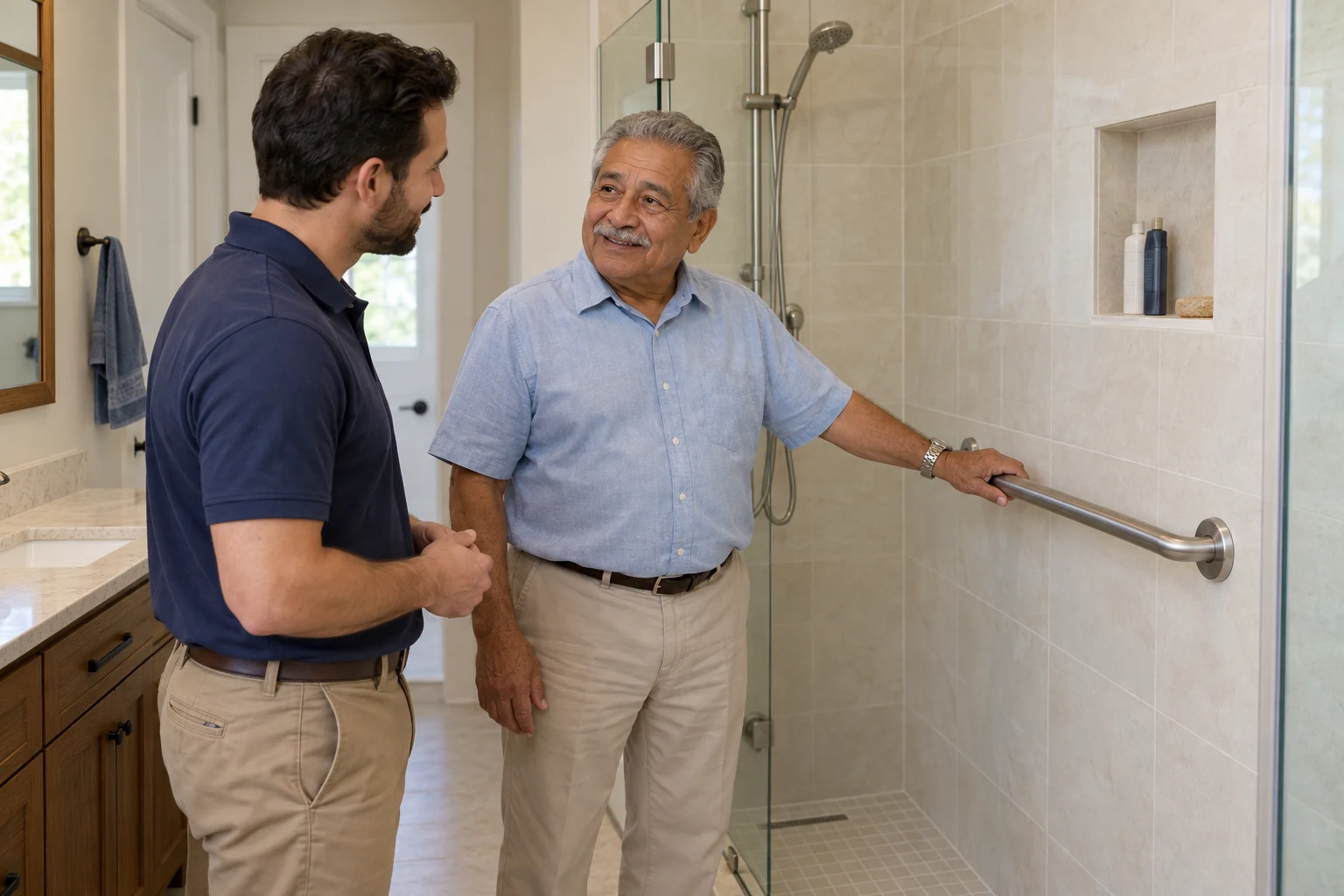
If you are helping a parent, start with what they find awkward and where they already reach for support. Their preferences matter, including how the bar feels in the hand and how it looks in a familiar room. You can ask about one spot or a few useful changes together.
Planning more than hand support? Explore our Bathroom Safety service.
What happens next
Tell us the city and whether you need support near the shower, toilet or another spot. Attach room photos in the request form above.
We contact you to talk through the requested work, the price and the earliest available appointment. You can flag a time-sensitive request in the form.
We install the agreed bar or bars, leave the area tidy and review the finished work with you.
Client feedback
Meet Joe, the person behind Triangle Home Safety.
Grab bar questions
A useful bar should be within comfortable reach for sitting down, standing up or transferring. A side wall beside the toilet is a common location; a rear-wall bar can serve a different part of the movement. ADA layouts use both side and rear bars, but your home’s layout and the way you move matter. If there is no suitable nearby wall, a properly selected toilet safety frame or another support may be worth discussing. We do not choose a clinical transfer setup from a photo alone.
The best option is the one that fits the person, toilet and space. A fixed wall bar may suit a bathroom with a reachable wall; a toilet-mounted or freestanding safety frame may suit a different layout. Check the product’s size, stability, weight rating and installation instructions. A frame is not automatically a replacement for a wall bar, and neither should make the approach to the toilet harder.
Two essentials are dependable anchorage and a position that works for the intended movement. The bar, fixings and wall support must work together as a system, following the product’s instructions. Where ADA standards apply, horizontal grab bars generally sit 33–36 inches above the finished floor, measured to the top of the gripping surface, and the assembly must withstand a 250-pound vertical or horizontal force. Most private homes are not covered by the ADA; those dimensions are not a universal prescription for every person’s bathroom. The U.S. Access Board toilet-room guidance explains these technical requirements.
A grab bar gives you a nearby handhold for a particular movement, such as stepping into a shower or getting up from a toilet. A handrail gives you continuous support as you move along stairs or a ramp. The right product follows the job it needs to do. For a concern along a staircase, explore our Stair & Handrail Safety service.
Start with the movement that has become awkward: crossing the shower or tub entrance, standing in the bathing area, or sitting and rising beside the toilet. Those are common places to consider fixed support. The exact position, orientation and number of bars depend on the room and the person using it. Our grab bars guide explains placement considerations without assuming every bathroom needs the same arrangement.
Common mistakes include attaching a bar to unsupported drywall, choosing unsuitable hardware, copying a height that does not fit the user, leaving too little room for a comfortable grip, and using a towel rail or suction product as weight-bearing support. A bar should also stay clear of controls and the route into the shower or toilet area. Getting the product and position right matters as much as how it looks.
No. A suction bar can lose its grip, and a grab bar only helps if it holds when you need it. Suction balance aids are not a substitute for fixed support when you need to put weight through your hands. We install fixed bars anchored into the wall. Our grab bars guide explains the difference between fixed bars and suction products.
Often, yes. Tile does not rule out a grab bar, but tile alone is not the support. The wall behind it, the tile’s condition and the product’s approved fixing method determine what is possible. If the area needs tile repair, new backing or waterproofing work, we explain that before you agree to the project.
One standard fixed bar, supplied and installed, starts at $295. Each extra bar in the same visit is $175. Tile that needs special drilling, or a wall that needs backing, is quoted separately. You get the price in writing before anything is booked.
About 45–90 minutes for one bar. Extra bars add 30–45 minutes each. Tile and wall conditions can lengthen it, and we check these from your photos first.