
Start with the movement the bar is meant to support
A grab bar is most useful when it solves a specific movement problem. “Put a bar in the shower” is less helpful than identifying the moment that feels difficult: stepping over the tub edge, entering a shower, turning, standing from a toilet, or maintaining balance while reaching for controls.
That purpose influences the location, orientation, length, and type of bar.
Common places families consider grab bars
Shower or tub entry
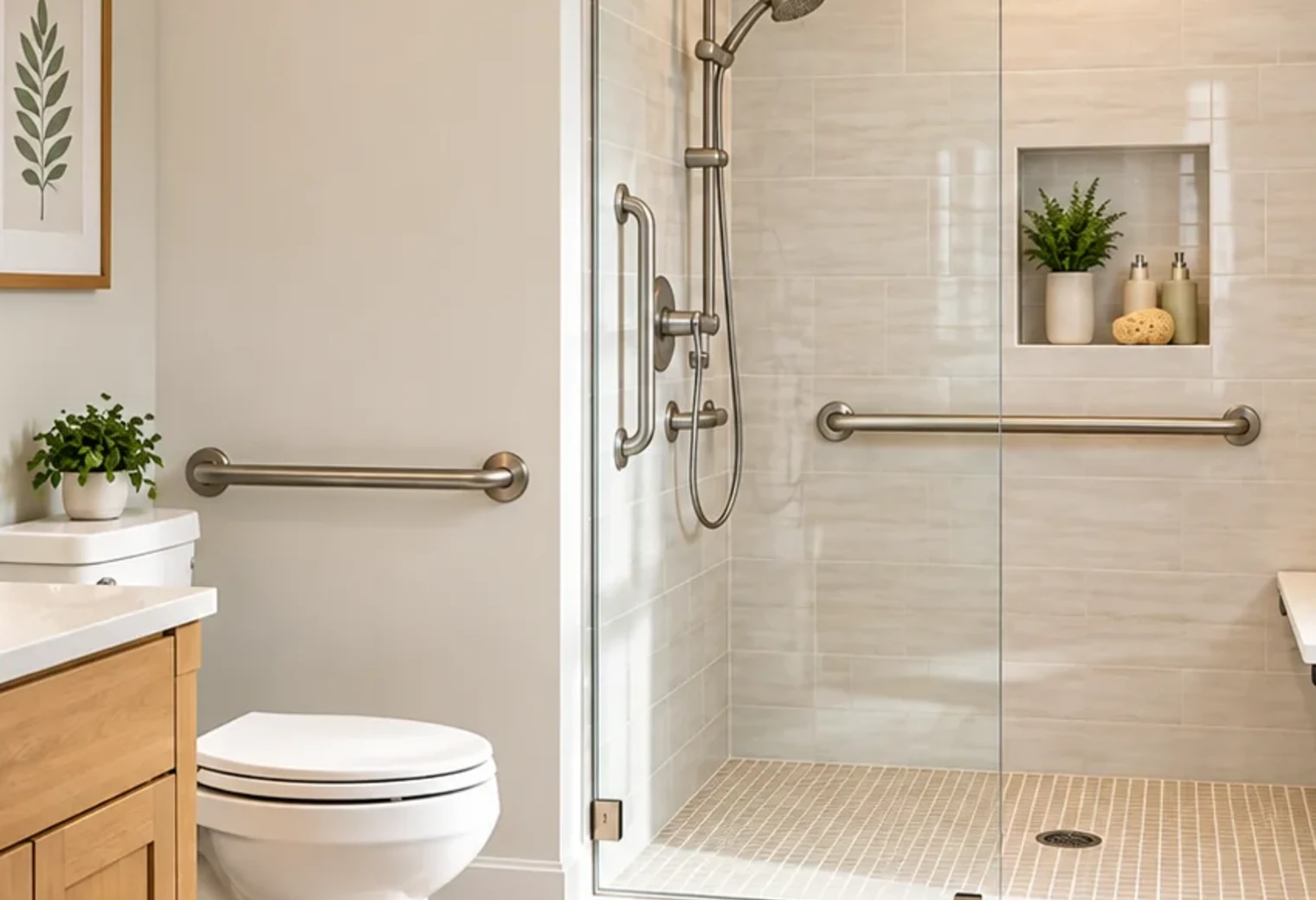
A fixed bar near the point of entry can provide a stable handhold while the person manages a change in level or wet surface. The exact location depends on the enclosure, wall construction, fixture layout, and how the person moves.
Inside the shower
Horizontal or other fixed support may be useful for standing balance, turning, or moving toward a seat. A handheld shower and seating can sometimes change how support is used.
Near the toilet
Support near a toilet may help with sitting and standing, but the useful position depends on space, approach, wall location, and individual transfer pattern.
Fixed bars vs. temporary suction devices
Federal fall-prevention guidance recommends grab bars in bathrooms. For a bar intended to provide dependable body support, a properly fixed installation is fundamentally different from a temporary suction accessory. Product instructions and the actual mounting surface must be reviewed before installation.
Triangle Home Safety does not present suction-cup bars as a substitute for a properly fixed grab bar when reliable support is needed.
Wall conditions can determine what is possible
Tile, fiberglass surrounds, drywall, framing, blocking, plumbing locations, waterproofing, and the condition of the substrate can all affect installation. A bar should not be mounted simply because a location looks convenient. If the proposed location cannot be secured appropriately within our scope, we explain the limitation before proceeding.
Does “ADA compliant” tell you where a grab bar belongs at home?
Not by itself. The ADA Standards provide technical accessibility requirements for covered buildings and facilities. A private home used only as a residence generally is not a public accommodation under ADA Title III, although other housing laws and specific residential facilities can have accessibility requirements.
For an individual homeowner, the best location may depend on personal transfer technique, body size, equipment, fixture geometry, and clinical recommendations. Treat ADA dimensions as a technical reference where relevant—not as a universal individualized prescription.
When an occupational therapist can help
If the main question is where should this particular person place their hands during a transfer?, or if cognition, strength, balance, wheelchair use, or complex functional needs are involved, an occupational therapist may be the better professional to determine individualized placement. Triangle Home Safety can work from recommendations the homeowner chooses to share when the installation is within our scope.
How many bars do you need?
Sometimes one bar solves a clearly defined problem. Other bathrooms benefit from a combination of support, seating, traction, and lighting. If the concern is limited to one known bar, a direct modification quote may be enough. If several bathroom concerns exist together, the Bathroom Safety Essentials package or a broader assessment may be easier to plan.
What does grab bar installation cost?
Triangle Home Safety publishes a current starting price for one standard fixed bar supplied and installed under standard conditions. Quantity, bar size and finish, tile or wall conditions, unusual mounting requirements, and specialty products can change the final quote. The live Grab Bar Installation page shows the current starting price.