
Home safety modifications should follow real routines
“Home safety modifications” can mean anything from changing a light fixture to rebuilding an entrance. The useful question is not which product appears on the longest checklist. It is which part of the home is making an important daily routine harder, less predictable, or less manageable.
For older adults, the strongest starting points are usually high-use areas: the bathroom, stairs, the main entrance, the bedroom-to-bathroom route, common walking paths, and frequently used kitchen storage. A focused modification may be enough. Other situations need an occupational therapist, medical provider, licensed trade, or larger remodeling contractor.
Main categories of home safety modifications
- Bathroom support: fixed grab bars, shower seating, traction, useful lighting, easier shower controls, and other focused changes.
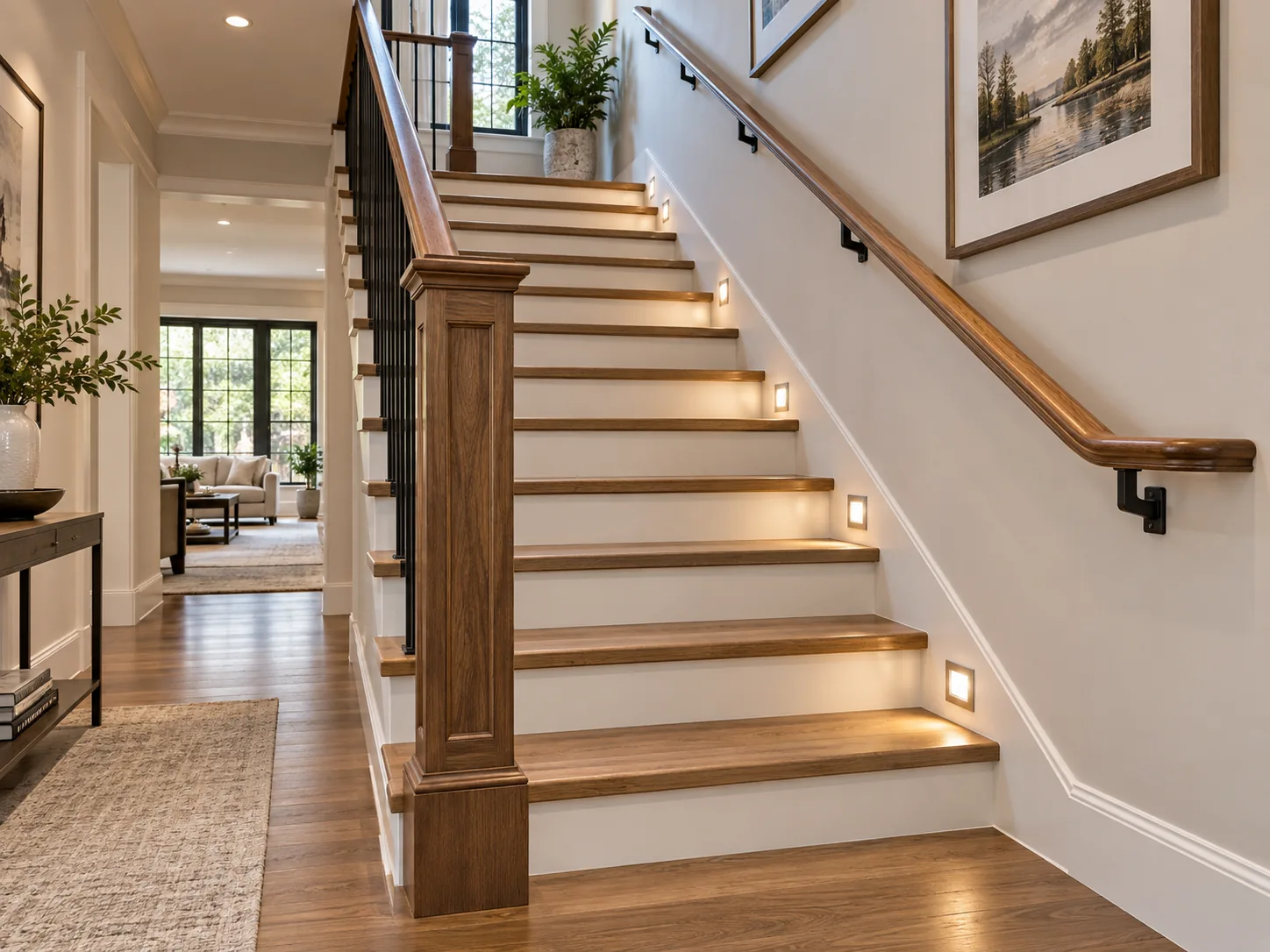
- Stairs and handrails: secure rails, visibility, lighting, traction, and clear approaches.
- Entry and threshold safety: manageable level changes, useful handholds, lighting, easier door hardware, and clear exterior paths.
- Lighting and nighttime routes: brighter, more even illumination where the person actually walks, especially between bedroom and bathroom.
- Floor and pathway improvements: reducing clutter, loose rugs, cords, abrupt transitions, and other repeated trip hazards.
- Kitchen and reach adaptations: easier hardware, pull-out storage where compatible, task lighting, and frequently used items moved into practical reach zones.
- Larger accessibility changes: ramps, lifts, widened openings, curbless showers, and major layout work when a focused modification cannot solve the problem.
Room-by-room priorities
Bathroom
Look at the specific movements that are difficult: entering the shower, standing, turning, sitting, rising from the toilet, or reaching controls. Dependable fixed support is different from a temporary suction accessory. If the main question is individualized transfer technique or exact placement for a particular person, an occupational therapist may be the better professional to guide the recommendation.
Stairs and a two-story home
Check rail security and usability, stair-edge visibility, lighting at the top and bottom, clutter, and how often essential routines require changing floors. Better lighting and secure rails are focused changes. A stairlift or home elevator is a larger decision with different cost, maintenance, power, and long-term-use considerations.
Entry and exterior route
Review the entrance the person actually uses. Pay attention to uneven surfaces, steps, thresholds, lighting, weather exposure, door hardware, and whether there is a stable place to pause or hold when appropriate.
Bedroom and nighttime route
Make sure a light is reachable from bed, the route to the bathroom is clear, and frequently used items are within comfortable reach. A small nighttime-route improvement can matter more than a major project in a room used less often.
Kitchen
Focus on repeated reaching, bending, twisting, carrying, and visibility. Easier hardware, pull-out storage, better task lighting, and moving everyday items can improve usability without turning the kitchen into a full remodel.
How to prioritize on a tight budget
Rank concerns by four questions: How often does the problem happen? Is the activity essential? Can a focused change solve it? Does another professional need to be involved first? This helps separate “address now” items from improvements that can wait.
Lower-complexity changes such as lighting, traction, clearer pathways, easier hardware, or a properly selected fixed grab bar can be worthwhile when they solve a frequent problem. A major remodel is not automatically better because it costs more.
Which modifications are worth the cost?
For aging in place, value is broader than resale return. A modification may be worthwhile because it makes an essential daily routine easier, provides reliable support, reduces an environmental barrier, or delays an unnecessary larger project. Compare usefulness, frequency, expected duration, disruption, maintenance, and whether a smaller solution achieves the same goal.
Fall prevention has limits
Home modifications can reduce environmental hazards, but they cannot guarantee that a person will not fall. Falls can involve medication, strength, vision, balance, blood pressure, cognition, footwear, and other health factors outside the home environment. Repeated falls, dizziness, sudden weakness, or other health changes belong with the appropriate healthcare professional.
When cognition or dementia is part of the picture
Keep changes simple, familiar, and coordinated with the people responsible for the person’s clinical care and decision-making. Environmental improvements may support consistency, but a home-modification provider should not diagnose cognitive conditions or prescribe individualized dementia care.
Respect the homeowner
Home safety work is more effective when the homeowner understands the concern and remains involved in decisions. Families can start by asking what the person wants to keep doing independently. Unless an authorized decision-maker must act, avoid turning a safety conversation into a takeover of the home.
What is often overrated?
The most overrated “solution” is any product or remodel that does not solve a real problem in that household. Expensive technology, a full renovation, or a dramatic accessibility feature may be appropriate for some homes and unnecessary for others. Start with the actual routine, not the trend.
When to use a whole-home assessment
A direct service request works when the need is already clear. A whole-home assessment is more useful when several rooms are involved, the family is uncertain about priorities, a recent change has affected routines, or the household wants a written plan before spending on multiple improvements.
Home Modifications for Older Adults and People With Disabilities
The useful modification depends on the person, the task, and the home rather than a label alone. Common environmental changes can include bathroom support, clearer pathways, easier hardware, lighting, threshold improvements, more reachable storage, and space for mobility equipment. Person-specific transfer, mobility, cognition, or equipment decisions may require an occupational therapist or another qualified professional.