
In 2026, Flooring-as-safety means choosing surfaces that support secure steps, manage moisture, and let walkers or wheelchairs move without catching. Flooring America reports that six flooring samples cost $12, giving households a low-cost way to compare options at home before planning a larger project.
Key Takeaways
| Question | Practical answer |
|---|---|
| What should senior-friendly flooring do? | Offer dependable traction, handle moisture where needed, and provide a firm, even surface for walking aids and rolling mobility devices. |
| Where should we start? | Prioritize the bathroom, entry, stairs, and bedroom-to-bathroom route, then address repeated hazards such as loose rugs, cords, and abrupt transitions. |
| Does waterproof mean slip-proof? | No. Water resistance describes how a material handles moisture, not how much grip it provides when wet. |
| How do we improve bathroom safety? | Pair a suitable floor with practical measures such as traction improvements, shower seating, grab bars, and appropriate lighting. See our bathroom safety service for examples of these complementary changes. |
| How do we make an entrance easier to cross? | Review the threshold, lighting, and traction together. Our entry and threshold safety information describes minor transition improvements. |
| Should we replace every floor? | Not necessarily. Targeted home modifications for seniors can address the rooms and routes that create the most difficulty in daily routines. |
2026 Flooring-as-safety: What Makes a Surface Senior-Friendly?
Flooring affects more than appearance. A senior-friendly surface should help reduce slipping and tripping while remaining easy to cross with a cane, walker, or wheelchair.
Those aims can pull in different directions. A highly textured surface may offer more grip but make rolling harder, while a very smooth finish may be easy to roll over but feel slick when wet.
When comparing flooring for aging in place, consider the whole route, not just the material. Check the floor’s feel when dry and damp, how it meets adjoining rooms, and whether a mobility aid rolls across it without catching.
- Traction: Look for a surface intended for the room’s conditions, especially in wet areas.
- Firmness: A stable, even surface generally supports easier movement with mobility aids.
- Moisture management: Match the floor and installation to likely spills, splashes, and cleaning routines.
- Transitions: Keep adjoining surfaces as level and predictable as possible.
- Maintenance: Consider whether routine cleaning leaves residue or moisture that could affect footing.
Flooring should work alongside other home modifications for seniors, rather than being treated as a stand-alone fall-prevention fix. Clear pathways, good lighting, correctly installed support features, and stable footwear also matter.
2026 Flooring-as-safety for Bathrooms: Balance Traction and Water Resistance
Bathrooms deserve close attention because water, transfers, tight turning spaces, and nighttime use can all affect footing. A slip resistant bathroom flooring choice should suit the room’s moisture exposure and remain manageable for the person using it.
Searches for slip resistant shower floor tile, slip resistant shower tile, and slip resistant bathroom floor tile often point to the same concern: getting reliable footing where water is most likely. Ask a qualified flooring professional how the proposed product performs in the intended wet-area conditions, and confirm whether the installation requires specialized waterproofing or trade work.
Waterproofing and slip resistance are separate considerations. A product described as waterproof may protect the flooring from moisture, but that description alone does not establish how much traction it provides when wet.
Ask about the specific product’s care instructions, surface characteristics, installation requirements, and suitability for the room. The research available for this guide does not provide product models, tested slip ratings, or material-specific recommendations, so we recommend confirming those details with the manufacturer and installer.
For a slip resistant bathroom tile or slip resistant bathroom flooring project, consider the full room setup, including drainage, shower entry, seating, and support points. A floor change alone cannot remove every risk, and major tile, plumbing, or waterproofing work may call for a separate specialist.
Did you know? Flooring America describes a value pack with six flooring samples, which can help seniors compare textures and comfort at home before choosing a floor. View the Flooring America source.
2026 Flooring-as-safety for Smooth-Rolling, Walker-Friendly Movement
For a wheelchair walker friendly flooring plan, prioritize firmness, stability, and smooth transitions. Mobility devices need a surface that does not snag wheels, tips, or glides, while users still need enough traction to step and turn securely.
“Smooth-rolling” does not mean glossy or slippery. It means the floor is even and firm enough to support movement, with no loose edges, deep gaps, or abrupt changes in height that interrupt a route.
Look closely at the joints between rooms and at doorways. Bathroom transition safety matters because a small raised edge can be difficult to see and challenging to cross, especially when someone is tired or moving with a device.
When comparing LVP for seniors, do not rely on the product category alone. Ask the flooring retailer or installer about the exact product’s surface, moisture suitability, seams, underlayment, cleaning needs, and how it will meet adjacent flooring.
Our practical check: Walk the intended route with the person’s usual mobility aid, if it is safe to do so. Notice whether wheels or tips catch, whether turns feel controlled, and whether the person can move from one room to the next without changing their stride unexpectedly.
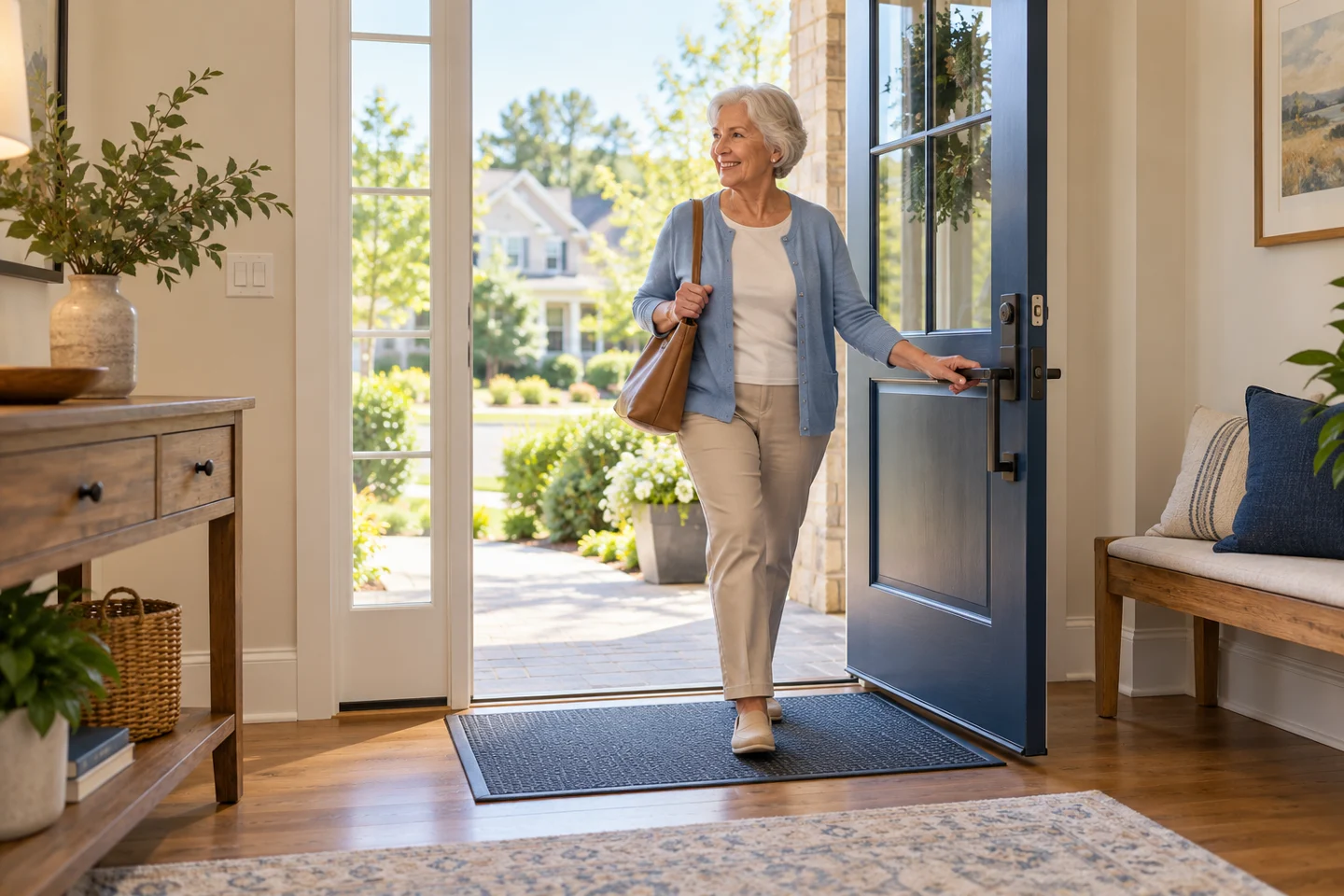
Planning Flooring-as-safety Along Stairs, Entrances, and Pathways
Replacing a floor is only one way to make a home easier to navigate. The room-by-room priorities for home modifications for seniors include clear pathways, good lighting, traction, and attention to repeated trip hazards.
Start with the routes used most often: the bedroom-to-bathroom path, the main entrance, stairs, and hallways. Remove or secure loose rugs, move cords out of walkways, and check for uneven edges or abrupt floor changes.
Stairs need their own assessment. A new floor covering does not replace a secure handrail, and a material that works on a level room may not be the right solution for stair treads.
At entrances, a low-profile transition may be easier to cross than a tall or abrupt threshold. Our aging in place modifications service describes minor improvements such as threshold transitions, traction, pathway lighting, and hardware changes.
For more involved changes, flooring installers, remodelers, and home-safety professionals may each have a role. Confirm who will handle floor preparation, waterproofing, transitions, and any structural work before scheduling the project.
How to Compare Anti-Slip and Waterproof Flooring Options in 2026
As you compare slip resistant flooring, make a shortlist based on the actual room and the resident’s mobility needs. A sample can help you judge color and texture, but it cannot fully show how a large installed area will perform or how seams and thresholds will be finished.
- Define the main need. Is the priority wet-area traction, easier wheelchair movement, fewer trip points, or simpler cleaning?
- Test the sample carefully. Compare the feel underfoot and ask the retailer how the sample relates to the installed product.
- Ask about wet conditions. Request product-specific guidance instead of assuming “waterproof” also means slip-resistant.
- Review transitions and edges. Include doorways, thresholds, floor vents, and joins with existing surfaces.
- Confirm installation scope. Ask whether subfloor repairs, waterproofing, or licensed trade work are needed.
- Plan for real routines. Consider who cleans the floor, how quickly spills are addressed, and which mobility aids the resident uses.
In 2026, flooring trends include more attention to lifestyle needs and waterproof luxury vinyl options, but a trend is not proof that a particular surface is right for a particular home. We recommend evaluating each product on its specifications and the resident’s day-to-day needs.
Did you know? Floor Coverings International identifies seven major flooring trends for 2026, including lifestyle-focused choices and waterproof luxury vinyl. View the Floor Coverings International source.
Budgeting for Flooring and Seniors Home Modifications
We cannot give a reliable installed-flooring price from the research available here. Costs depend on the chosen product, room size, preparation, removal of existing flooring, transitions, and whether the job includes specialized waterproofing or other trade work.
Use a written quote that separates materials, labor, floor preparation, transitions, and any additional work. If you are combining flooring with seniors home modifications, ask which improvements can be handled together and which require a separate contractor or assessment.
Bathroom safety work may include traction improvements, shower or bath seating, grab bars, lighting, and smaller usability changes. Major tile work, waterproofing, plumbing, and structural changes may fall outside a minor home-safety service’s scope.
That distinction helps families plan realistic aging in place projects: address immediate hazards with appropriate minor changes, then get qualified estimates for flooring replacement or larger renovation work.
Frequently Asked Questions
What is the safest flooring for seniors in 2026?
There is no single safest floor for every home. For 2026 Flooring-as-safety, compare traction, moisture suitability, firmness, ease of rolling, and the transitions between rooms, then confirm product-specific details with a qualified professional.
Is waterproof flooring automatically slip-resistant?
No. Waterproof describes how a product handles moisture, while slip resistance concerns traction underfoot. For slip resistant bathroom flooring, verify both the product’s moisture suitability and its guidance for wet conditions.
What is the best slip-resistant flooring for a bathroom?
The best choice depends on the bathroom layout, water exposure, and the resident’s mobility needs. Ask about product-specific wet-area suitability, installation, cleaning, and how the floor will meet the shower, doorway, and adjoining room.
Is LVP a good choice for seniors who use walkers or wheelchairs?
LVP for seniors may be worth comparing, but the category alone does not guarantee safe or easy movement. Check the exact product’s surface, firmness, installation details, and transitions with the person’s usual mobility aid.
How can we improve bathroom transition safety?
Look for abrupt height changes, loose edges, and floor joins that catch a walker or wheelchair. A well-planned, low-profile transition may help, but the right solution depends on the floor levels and should be installed securely.
Can anti-slip tape make stairs safer for an older adult?
Slip resistant tape for stairs may add traction, but it does not replace secure handrails, good lighting, or a review of the stair surface. Follow the tape manufacturer’s instructions and check that edges stay firmly attached and do not create a new catching point.
Conclusion: Make 2026 Flooring-as-safety Fit Everyday Life
2026 Flooring-as-safety is about matching anti-slip, waterproof, and smooth-rolling surfaces to the person, room, and route. Prioritize high-use areas, pay special attention to bathroom and threshold transitions, and verify product claims instead of assuming one feature guarantees another.
Thoughtful aging in place planning can combine flooring decisions with lighting, clear pathways, traction improvements, and other home modifications for seniors. Start with the places that cause the most difficulty, compare options in the home, and bring in qualified professionals for installation and work beyond minor modifications.