
Make a route clearer.
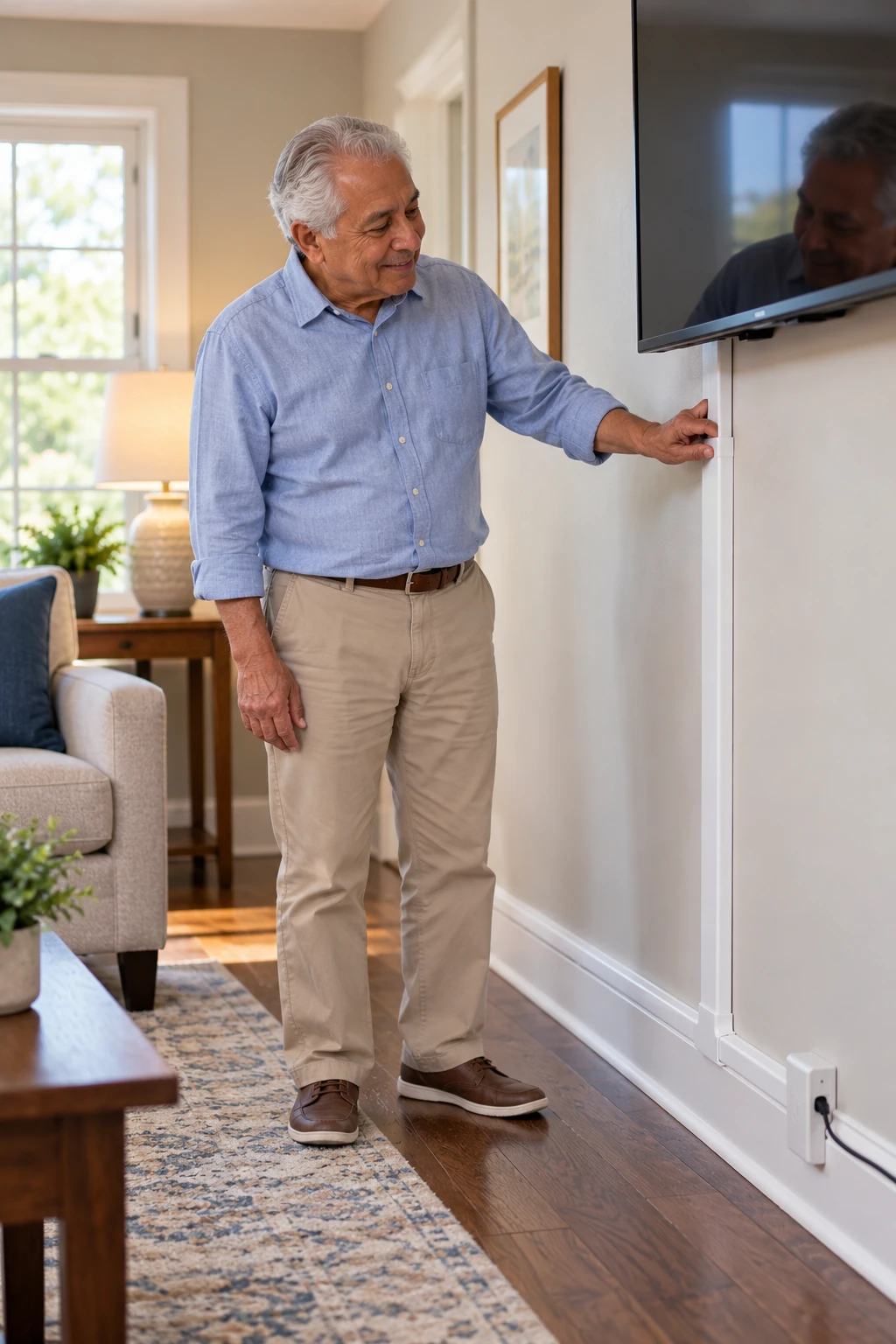
Surface-mounted cord covers and well-positioned storage reduce unnecessary obstacles without opening walls.
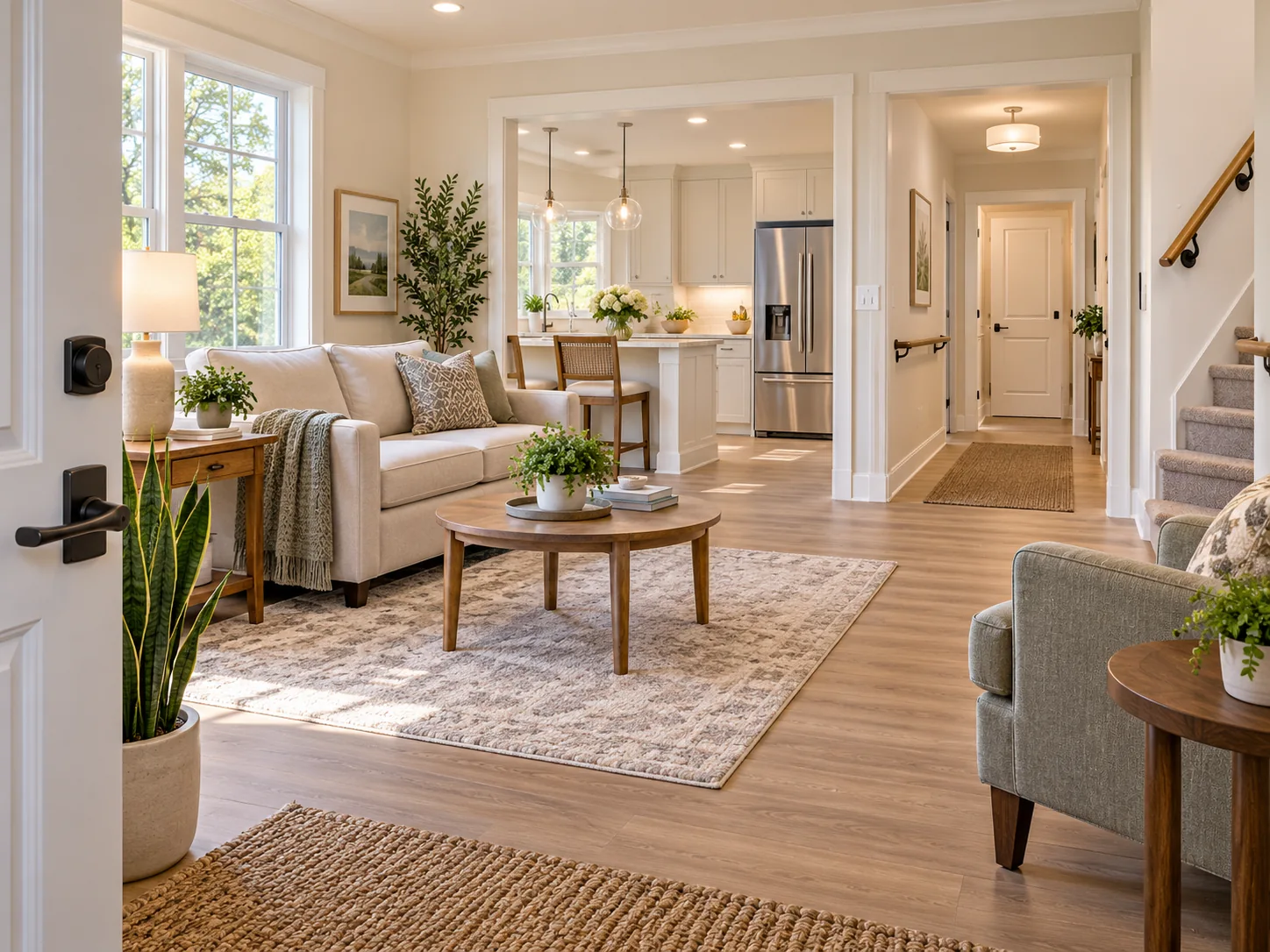
Senior home safety & aging in place service
Not every worry fits one room: a doorknob that's hard to turn, a dark walk to the bathroom at night, a rug that slides, a chair that's hard to get out of. Tell us what you've noticed, and we'll suggest a simple fix with the price up front.
Why this service
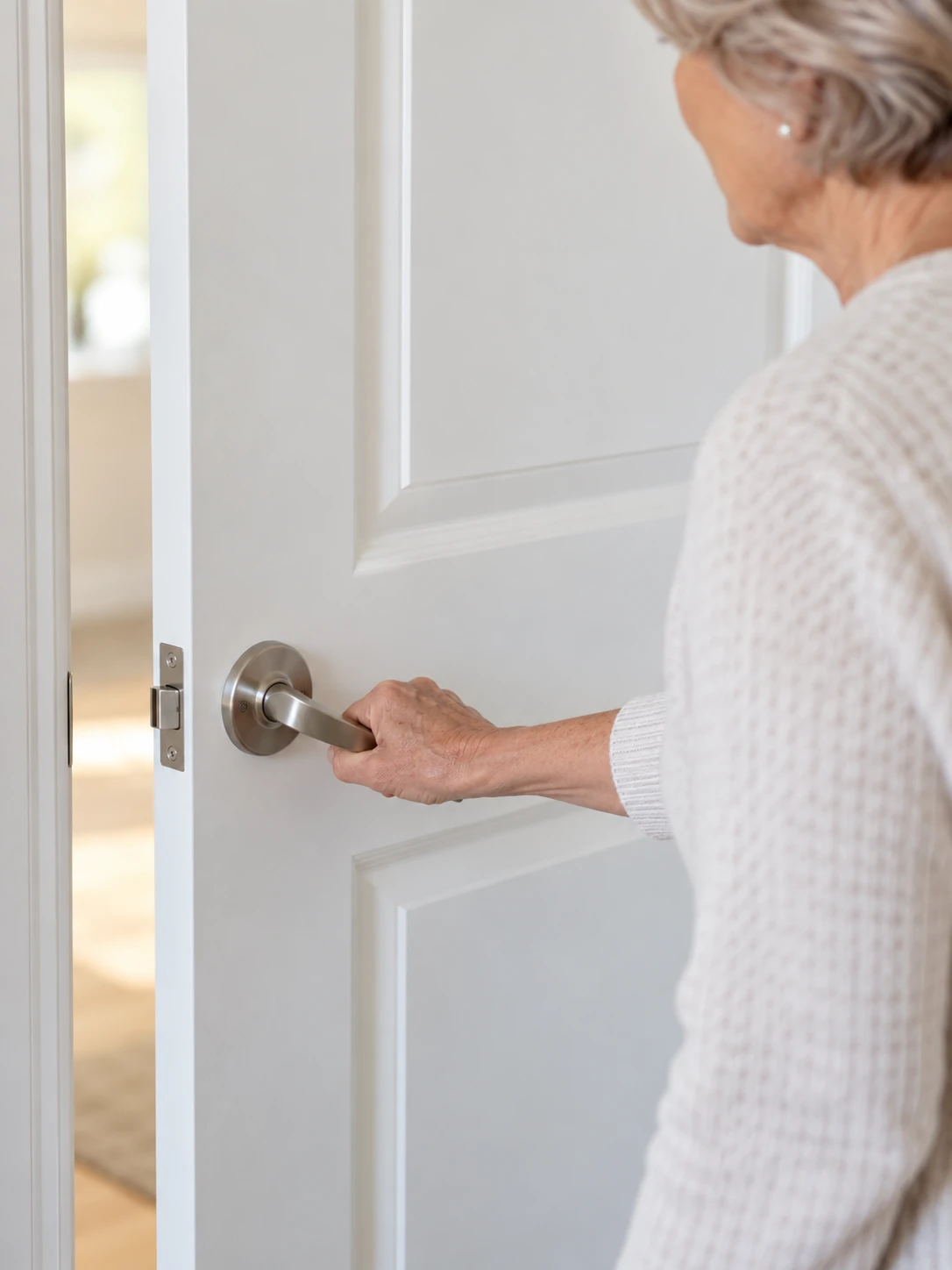
It's rarely one big thing. It's the doorknob you have to grip with both hands, the walk down the hall at night, the rug that curls at the edge, the cord you step over every day. Most people stop mentioning these. They just do a little less.
We start with the one that bothers you most. Often a small fix is enough: a lever instead of a knob, a light that comes on when your feet hit the floor, a rug that stays put. We'd rather fix what bothers you than redo a room.
If you're helping a parent, ask them to walk you through their day, from the bedroom to the kitchen and back. Where they pause or reach for the wall is where to look. A few photos are enough to start.
Some things are bigger than a small fix, like electrical work, a damaged floor or a clinical equipment decision. When that's the case, we'll say so and tell you who to call.
Surface-mounted cord covers and well-positioned storage reduce unnecessary obstacles without opening walls.
We first check whether a compatible stable assist product or approved adjustment makes sense for the piece you already own.
Defined minor work gets a written quote; larger electrical, structural or clinical needs are referred.
Ready to move forward?
Show us the spot that causes trouble. A photo of the doorway, cord route, bed, chair or wall helps us review compatible options and give you a written quote.
Who it helps
This is a useful place to start when you know the everyday problem but it does not fit one of our other room-specific services.
A path of motion lights from bed to bathroom.
Rugs secured or removed, cords tucked along the wall.
Handles, risers or lowered storage, where they suit the furniture.
Small fixes that follow what they want.
Client feedback
Meet Joe, the person behind Triangle Home Safety.
Planning the service
Lever fitted and tested. Locking or specialty handles quoted separately.
Four plug-in motion lights from bed to bathroom. No rewiring.
Rugs removed or secured with pads or grip tape. Loose threshold strips fixed.
One run along a wall or baseboard. Nothing in the wall.
Dressers, bookcases and TVs strapped to suitable wall studs.
We test every alarm, swap batteries and replace expired units. Battery-powered only. Alarm cost varies by model and is charged at cost.
For a stable compatible chair, after checking its rating.
Rated risers on a stable compatible piece only.
One suitable rod or shelf brought down to reachable height.
One modest shelf anchored to suitable studs.
Swing-clear hinges on a compatible door. May add roughly 1½–2 inches of clearance; confirm measurements.
Lockbox or reflective house numbers for family, caregivers or responders. House numbers alone at the posted rate; suitable installation surfaces required.
Safety-focused small indoor tasks: rearranging furniture for clear routes, moving everyday items to reach height and minor non-electrical fixes. General handyman repairs are separate. Send photos and a list.
Only after photos, bed and mattress compatibility, and a doctor's or OT's guidance. Insurance scope must also be confirmed.
Prices are for the job described. We confirm the full cost in writing before any work begins.
Some requests need an electrician, a remodeler or an occupational therapist, especially bed handles, anything hardwired, or an individual equipment decision. We'll tell you before you decide.
Video doorbells are on our Front Door & Entry Safety page.
What happens next
Choose the task on the form and share pictures of the doorway, cords, furniture, bed frame or proposed shelf location.
We check product ratings and mounting conditions, explain what needs further professional input, and agree on a written quote.
We complete approved minor work, check stability or operation as appropriate, explain use and leave the immediate work area tidy.
Common questions
Answers to help you choose a first step and understand the work before you request it.
An interior lever starts at $195 for the first door and $75 for each extra. A night-light path is from $115, cord covers from $125, a rug and floor check from $85, anchoring a tall piece of furniture $95, and a smoke alarm check $95. You get the full price in writing before anything is booked.
Often, yes. A small-jobs visit is $115 for the first hour and $55 for each extra half hour. Send photos and a list. We’ll tell you what fits one visit and what needs a specialist.
Only after we look at the bed, the mattress and the person's needs. Portable adult bed rails can cause entrapment, and some people shouldn't use them at all. Please ask the doctor or an occupational therapist first. We'll quote it after reviewing photos and their note, and we won't install one that doesn't suit the bed or the person. Insurance scope must also be confirmed.
Tall dressers, bookcases and TVs can tip, especially if a drawer is open or someone leans on one. Straps into suitable wall studs are an affordable improvement and a standard first item takes about 30–45 minutes. We'll tell you if the wall can't hold one.
Yes. We test every alarm, change accessible batteries, and replace battery-powered units that have passed their replacement date. Many smoke alarms have a ten-year service life; follow the model's instructions. We don't work on hardwired alarms, and the visit doesn't certify code compliance. Our Home Maintenance Plan can repeat the checks every quarter.
Often the best fix is removing a rug. If you want to keep it, grip tape or a suitable rug pad can help keep it flat. Cords can be tucked along the wall in covers. We don't run cords through walls or add outlets.
Sometimes. We check the frame, the legs and the weight rating first, because a higher seat can be less stable. If it isn't safe, we'll say so.
An electrician handles new outlets, switches and anything hardwired. A remodeler handles structural work and major doors. An occupational therapist can advise on bed handles, transfers and individual equipment. We'll tell you which one when it comes up.
No. If you already know which small home fix you want, you can request it directly and share photos. When concerns span several rooms or you aren't sure where to start, our Whole Home Safety Assessment gives you a written priority plan and follow-up.