
Address Now
Items that deserve the most immediate attention
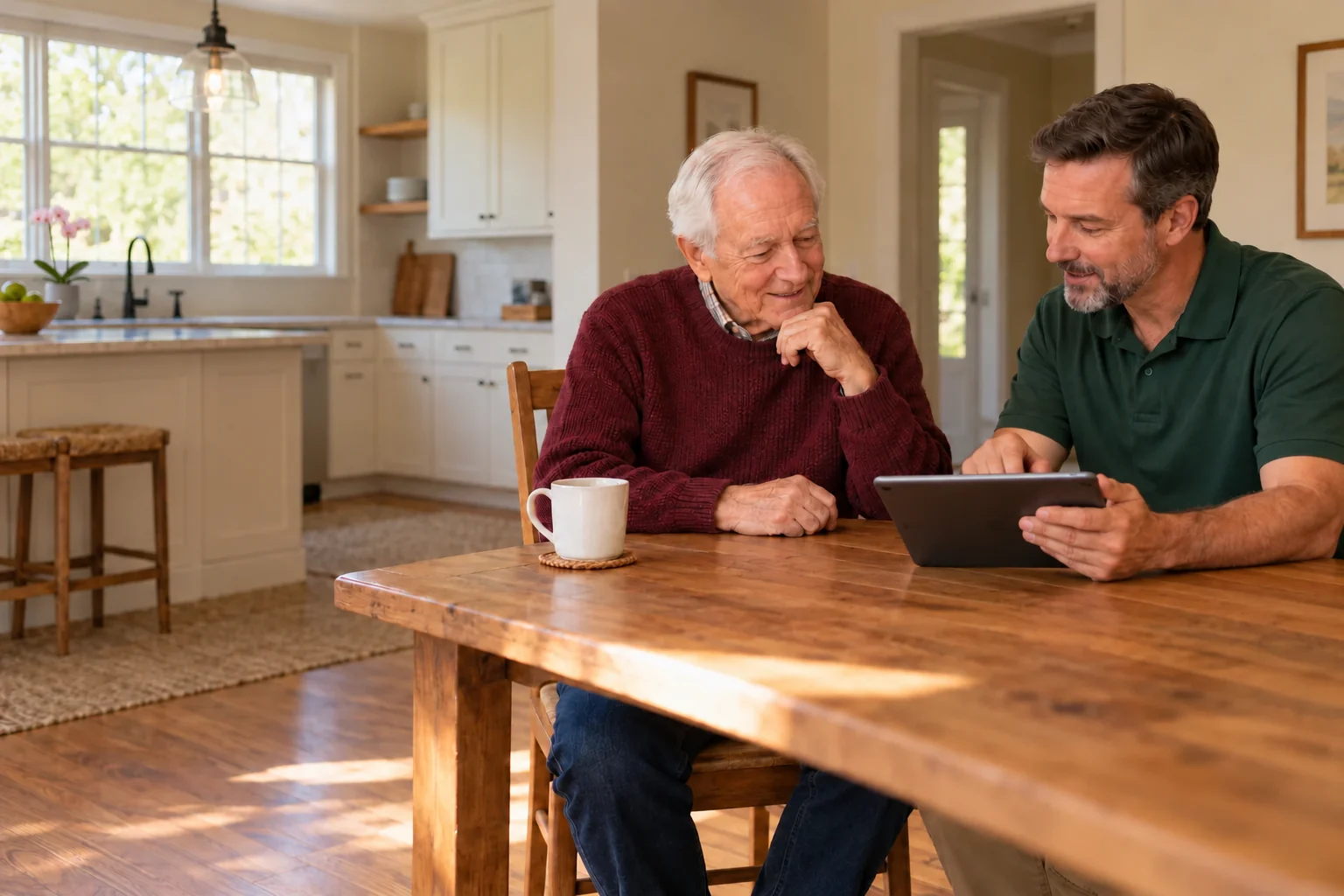
Senior home safety & aging in place service
When something at home becomes harder, you do not have to work out the answer alone. A Whole Home Safety Assessment gives you a written plan for safer aging in place.
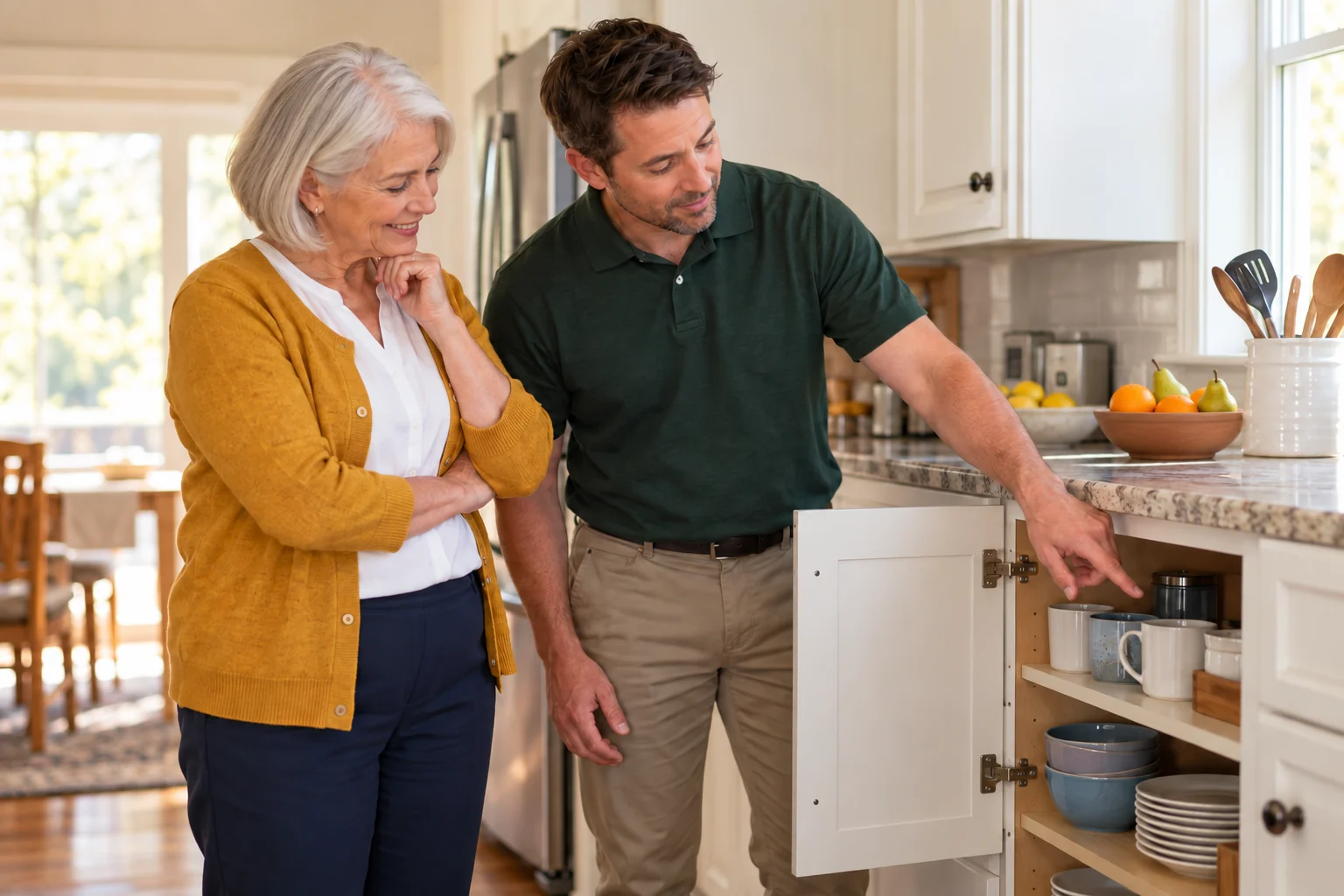
Why start with an assessment?
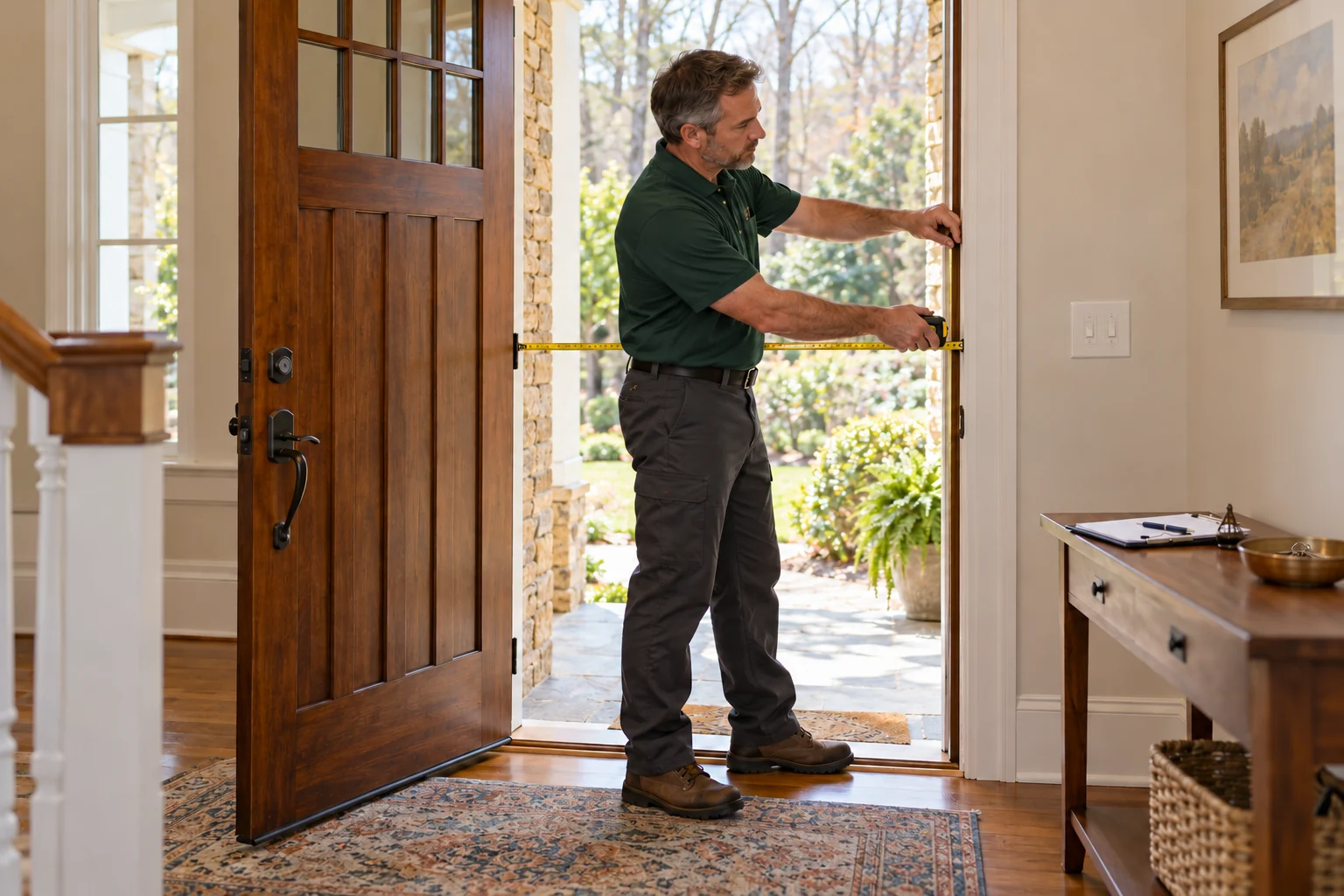
You may know that something at home feels harder without knowing what should change. During a Whole Home Safety Assessment, you can show us the places that worry you. We review the home environment as mobility, balance, vision, reach or routines change. This is a nonclinical visit.
You leave with a plan you can use at your own pace. It shows which concerns need attention first, which changes can wait and when another professional should help. You choose how much work to take on.
What we review
We look at where you move, what you reach for and which routes you use after dark. The review covers the physical home, including the areas below.
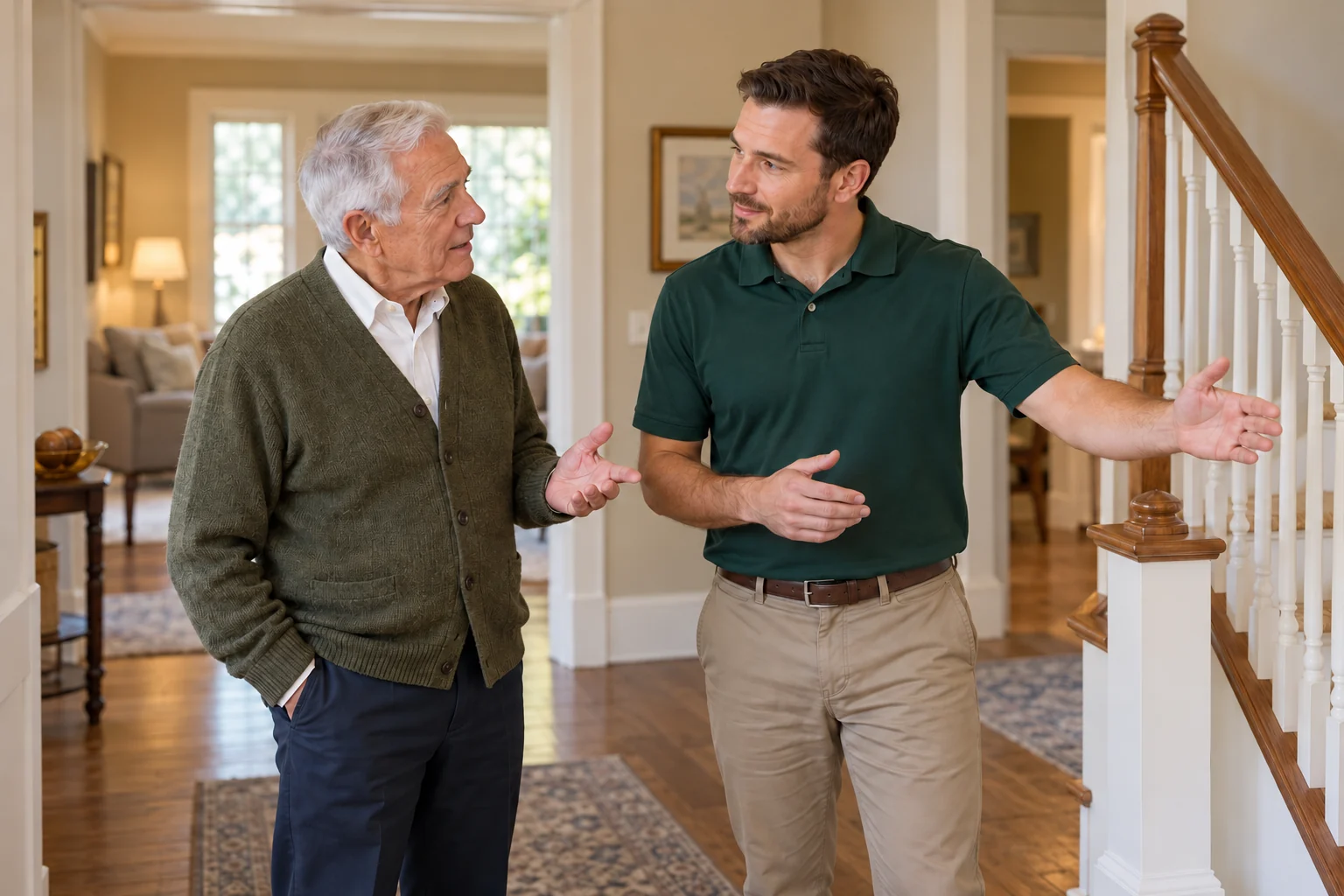
Who it helps
When several concerns add up, it can be hard to know where to begin. A whole home safety assessment helps you see them together.
What you receive
Keep a clear record of what needs attention. You can tackle the priorities at a pace that works for you.
Items that deserve the most immediate attention
Useful improvements that matter but may not be urgent
Changes worth considering as needs and routines evolve
Items better handled by an OT, electrician, plumber, contractor, or other qualified professional
Helping a parent from another city or state?
You can help a parent even when you live far away. With their okay, we can arrange how you join the conversation and receive updates. Written findings, priority recommendations and relevant project photos help you see what was reviewed or completed. Before the visit, we agree on access, who can make decisions and who may receive information.
For Families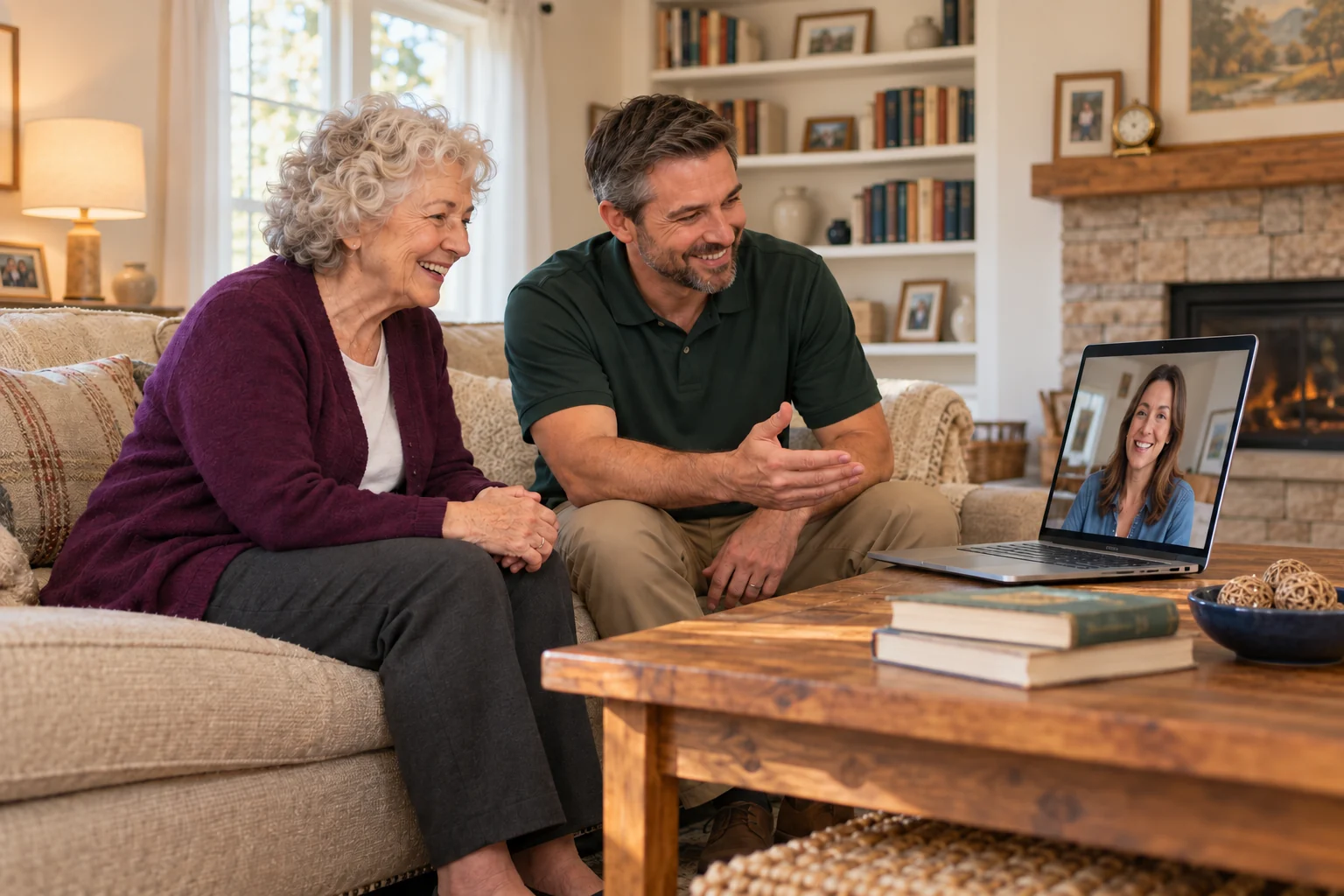
Know the difference
Our assessment looks at the home: the stairs, bathroom, lighting, access and other surroundings. An occupational therapist can assess how a person’s abilities and daily activities interact with those surroundings. You may need either service or both. The comparison guide explains their different roles.
Compare Professional RolesPlanning your visit
See the price, the usual visit length and what happens afterward, so you know what to expect.
Cost
The Whole Home Safety Assessment is $295. It includes the in-home visit, your written Triangle Home Safety Plan and follow-up to answer questions about your recommendations. Products and modification work are quoted separately.
Timing
The in-home review typically takes 75–90 minutes. Timing can vary with the size of the home, the number of areas being reviewed, and the questions the homeowner or family wants to discuss.
Move forward when you are ready
The assessment remains valuable on its own. If you decide to move forward with a package, part of the fee can follow you into the project.
Apply $100 toward Bathroom Safety Essentials, Safe Entry & Access, or Stair & Hallway Safety.
If you choose the Whole Home Safety Upgrade, the full assessment fee is credited toward the package.
Assessment credit applies to one qualifying package booked within 45 days of the assessment and cannot be combined with other promotions.
What happens next
Tell us who the visit is for and what prompted the concern
We contact you to confirm the home, availability, and any helpful details
We review the physical environment room by room, typically in 75–90 minutes
Recommendations are organized by priority and explained in plain language
Ask Triangle Home Safety about appropriate minor modifications or use the plan with other professionals
Common questions
Clear answers about what the visit includes, who can arrange it, and when another professional may be a better fit.
You receive a written Triangle Home Safety Plan with recommendations grouped by priority: now, soon, later and specialist help.
It is yours to keep and use. Follow-up is included, so you can ask questions about your plan and recommendations. You can choose appropriate home modifications with us or share the plan with another qualified professional.
Yes. With the homeowner’s permission, family members can join in person or remotely. We keep the person living in the home at the center of the conversation, while helping loved ones understand the recommendations and next steps.
You can share recommendations from an occupational therapist (OT) or physical therapist (PT) when you have permission to do so. For example, an OT may have specified a fixed grab bar’s position, length or orientation; we can use that information when discussing the requested installation.
We still check the wall, mounting surface and product requirements before agreeing to the work. Questions about transfer technique or changes to a clinical recommendation go back to the recommending professional.
Sometimes. Straightforward improvements may be completed during the same visit when the scope is clear, the right materials are available, and site conditions allow.
More involved work, additional products, or conditions that need further review are scheduled separately. The assessment is still valuable on its own because you receive a prioritized plan rather than only an installation estimate.
Major structural remodeling and work requiring a licensed trade are evaluated separately and referred when appropriate.
Examples can include significant electrical work, plumbing alterations, major structural changes, full bathroom remodeling, and other work that should be completed by a properly licensed specialist. We explain those boundaries clearly so families know who should handle each part of the plan.
Triangle Home Safety is based in Apex and serves Apex, Cary, Raleigh, Morrisville, Holly Springs, Durham, Chapel Hill and nearby Triangle communities.
Send us the home’s city or ZIP code if you are unsure whether it is within our service area. We will confirm availability before scheduling.