
Start with the question
Physical-home priorities and individualized clinical function are related, but they are not the same question.
Aging in Place comparison guide
Unsure whether you need a home safety assessment or an occupational therapy home evaluation? Learn how a nonclinical home review and individualized OT guidance can help with different questions.
The short answer
Choose based on the question you need answered. Triangle Home Safety evaluates the physical home environment and practical nonclinical modifications within our scope. An occupational therapist is a licensed clinical professional who can evaluate how a person’s functional abilities, routines, cognition, mobility, and daily activities interact with the home. Some families benefit from one; others benefit from both.
Physical-home priorities and individualized clinical function are related, but they are not the same question.
Triangle Home Safety assesses the environment; occupational therapy can evaluate the person, activities, and environment together.
OT recommendations can inform practical home modifications when both services are useful.
Unsure which kind of visit would help you or your loved one? A home safety assessment and an occupational therapy home evaluation overlap in some areas, but they answer different questions and have different professional scopes.
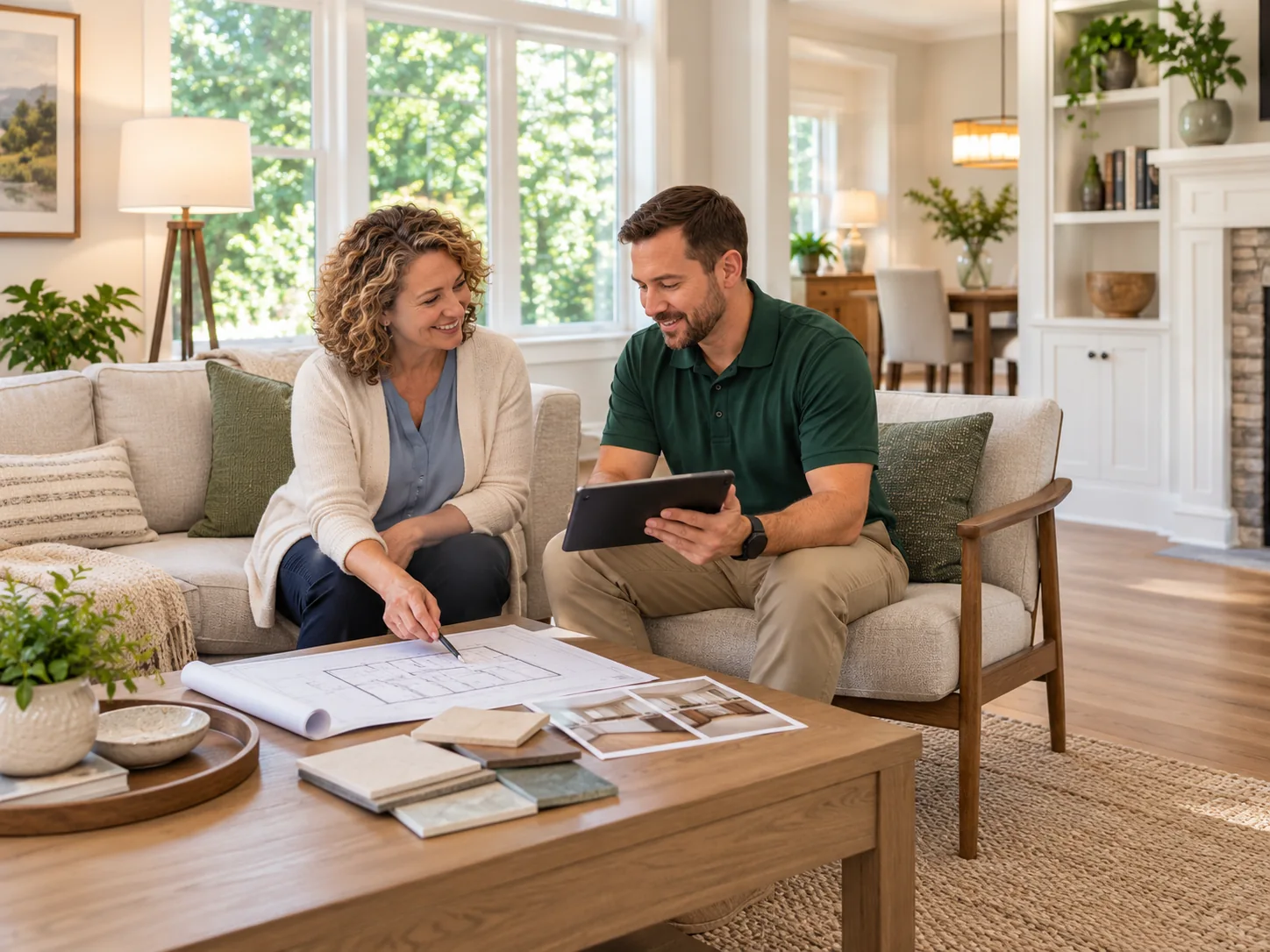
Our starting point is the physical home: bathrooms, stairs, entries, lighting, pathways and hardware. You receive a written plan with priorities and recommendations for specialist help where needed.
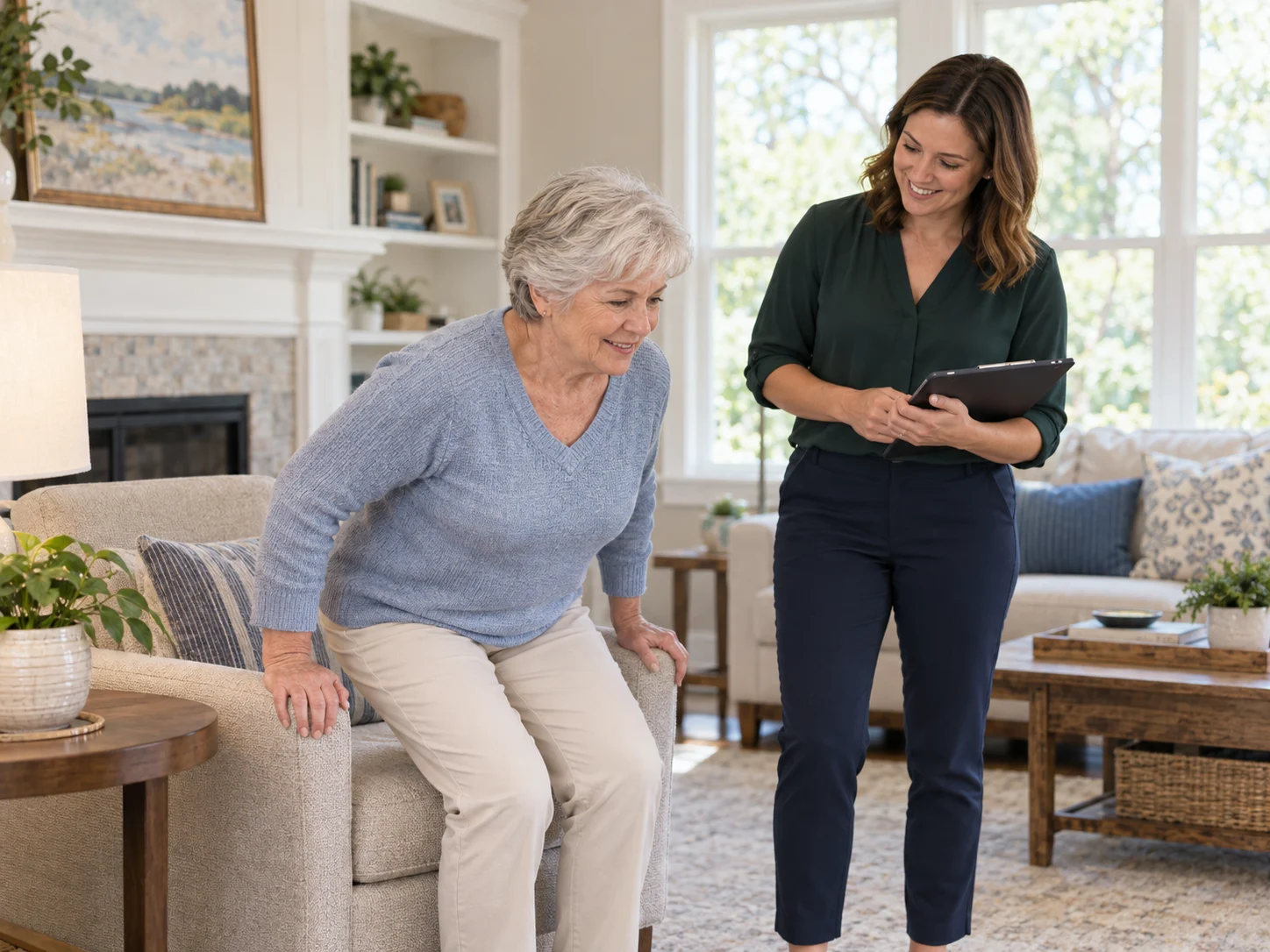
Occupational therapy takes a clinical person–activity–environment perspective. An OT may evaluate how strength, balance, cognition, vision, transfers, self-care, routines, and other functional factors affect a person’s ability to complete daily activities in the home. That clinical information can lead to individualized recommendations for equipment, techniques, caregiver strategies, or home modifications.
Start with the concern you want help understanding. That will guide which professional to contact first.
Side-by-side comparison
Use this table as a decision guide rather than a substitute for discussing the actual situation with the appropriate professional.
| Compare | Triangle Home Safety Assessment | Occupational Therapy Home Evaluation |
|---|---|---|
| Primary focus | Physical home environment and practical home-safety priorities | How the person’s abilities and daily activities interact with the home environment |
| Clinical evaluation | No — nonclinical environmental review | Yes — occupational therapy is a licensed clinical profession |
| Typical starting point | Concern about several rooms, pathways, lighting, entries, bathrooms, stairs, or overall home use | Concern about transfers, self-care, cognition, mobility, routines, or participation in daily activities |
| Written outcome | Prioritized Triangle Home Safety Plan for the physical home | Individualized OT findings and recommendations based on functional needs |
| Home modifications | Can quote or complete appropriate minor modifications within scope | May recommend or help specify modifications and equipment as part of clinical care |
| Medical diagnosis | No | OT evaluates occupational performance and function; medical diagnosis remains within the appropriate medical provider’s role |
| Best for adult children | Useful when the family wants a clear picture of the home and practical next steps | Useful when the family needs individualized clinical insight into how the parent is functioning at home |
Which one fits?
Option A
A Triangle Home Safety assessment may fit when the family wants a broad, nonclinical review of the physical home; several rooms or travel paths may need attention; an adult child wants a written plan; or the family wants help prioritizing practical environmental improvements.
Option B
An occupational therapy home evaluation may fit when the main question is how a person’s specific physical, cognitive, sensory, or functional abilities affect bathing, transfers, mobility, dressing, cooking, or other daily activities—and individualized clinical recommendations are needed.
Sometimes the answer is both
You may benefit from both when an OT identifies individualized functional needs and Triangle Home Safety is asked to review or complete appropriate nonclinical home modifications within our scope. We can work from recommendations a client chooses to share.
Professional & official references
Comparison FAQs
Answers about nonclinical home reviews, individualized OT recommendations, implementation, and when both services may be useful.
You can share recommendations from an occupational therapist (OT) or physical therapist (PT) when you have permission to do so. For example, an OT may have specified a fixed grab bar’s position, length or orientation; we can use that information when discussing the requested installation.
We still check the wall, mounting surface and product requirements before agreeing to the work. Questions about transfer technique or changes to a clinical recommendation go back to the recommending professional.
Sometimes. Straightforward improvements may be completed during the same visit when the scope is clear, the right materials are available, and site conditions allow.
More involved work, additional products, or conditions that need further review are scheduled separately. The assessment is still valuable on its own because you receive a prioritized plan rather than only an installation estimate.
Major structural remodeling and work requiring a licensed trade are evaluated separately and referred when appropriate.
Examples can include significant electrical work, plumbing alterations, major structural changes, full bathroom remodeling, and other work that should be completed by a properly licensed specialist. We explain those boundaries clearly so families know who should handle each part of the plan.
Home modifications can reduce environmental hazards and make common movements easier, but no grab bar, rail, light, or flooring change can guarantee that a person will not fall.
If falls, near falls, dizziness, balance, strength, vision, medication, or cognition have changed, home-environment work may be only one part of the picture. A medical, physical therapy, or occupational therapy evaluation may also be appropriate.
Still not sure?