
Begin with the person, routines, and stage of change
There is no universal dementia-proof home. Alzheimer’s disease and other dementias affect people differently, and needs can change over time. Begin with the person’s familiar routines, current abilities, preferences, home layout, and the concerns observed by family or caregivers.
Make the smallest useful change when possible, explain changes in a calm and respectful way, and avoid changing many familiar cues at once. A healthcare professional or occupational therapist can help when cognition, behavior, transfers, mobility, or daily activities require individualized assessment.
Entries, exits, and wandering concerns
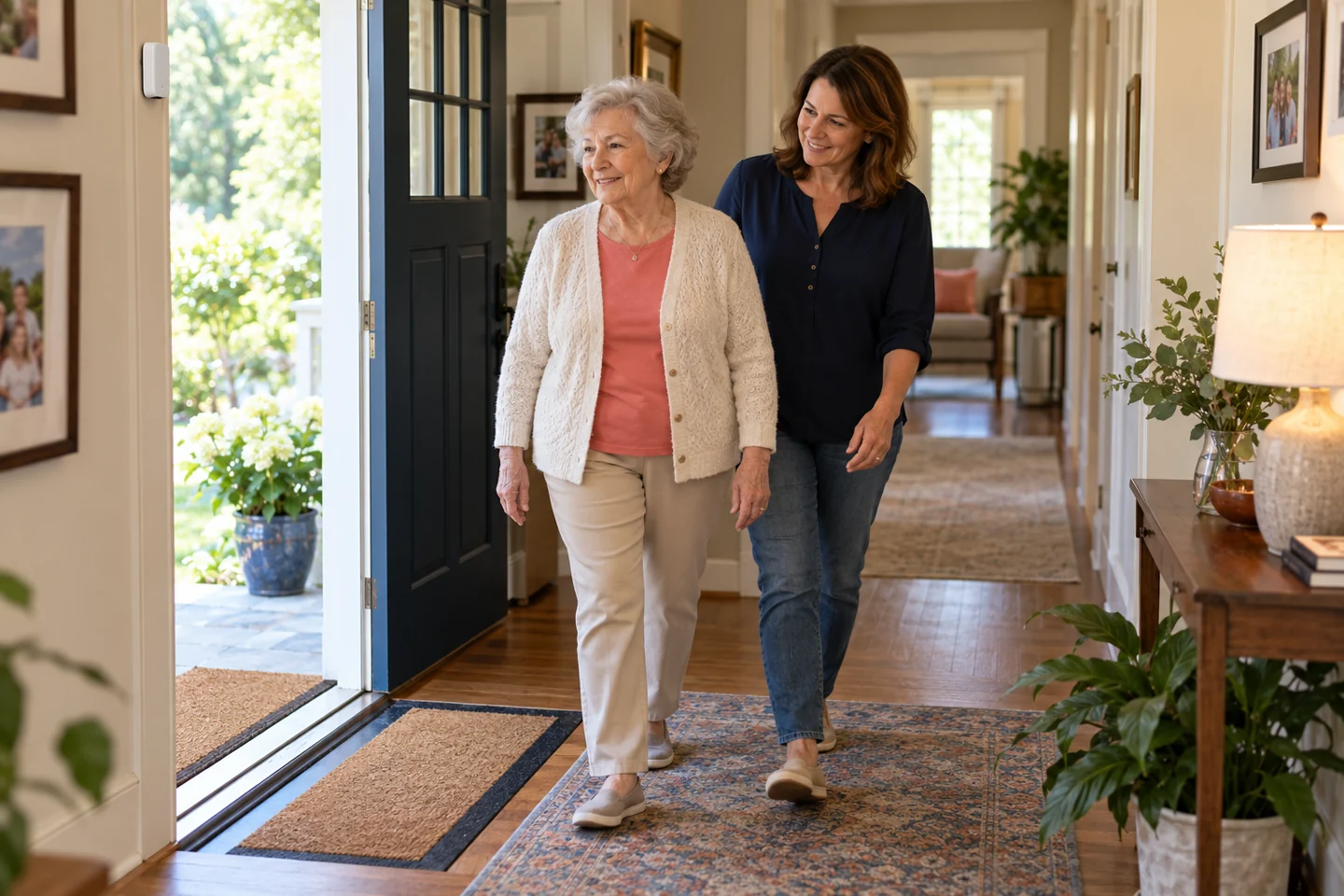
Door chimes, contact alarms, motion alerts, and other monitoring tools may help notify a caregiver when an exterior door is opened. Keep current photographs and an emergency contact plan available, and consider a personalized identification or location-support plan when wandering is a concern.
Any access-control strategy must preserve emergency escape, comply with applicable fire and building requirements, and avoid trapping the person in the home. Hiding a doorknob, adding a child lock, or changing a lock is not automatically appropriate for every household. Review the plan with the responsible caregiver and appropriate clinical or safety professionals.
Lighting, contrast, and visual interpretation
Use even, comfortable lighting along the routes used most often, especially between the bedroom and bathroom. Reduce deep shadows and glare. Clear contrast between floors, walls, doors, toilet seats, and important objects can sometimes make the environment easier to interpret, while busy patterns or highly reflective surfaces may be confusing for some people.
Test changes with the person rather than assuming a color or sign will work. Vision changes and perception can vary, and a familiar object may be more useful than a new label.
Kitchen and appliance safety
Match kitchen access to the person’s current abilities and supervision plan. Keep commonly used safe items easy to find. When appliance use has become unsafe, families may consider knob covers, shut-off devices, supervised cooking, or limiting access—but the right approach depends on the person and the home.
Smoke and carbon-monoxide alarms should be present and maintained. Keep a fire extinguisher accessible to a capable caregiver and maintain a clear emergency plan. Licensed electrical, gas, or appliance work belongs with the appropriate professional.
Medicines, cleaning products, tools, and other hazardous items
Store medicines, cleaning products, sharp tools, firearms, vehicle keys, and other hazardous items according to the household’s current risk and care plan. A locked or controlled storage area may be appropriate, but access must still work for the authorized caregiver. Medication decisions and administration plans belong with the prescribing and care team.
Bathroom and nighttime routes
Keep the bedroom-to-bathroom route clear and consistently lit. Look at traction, reliable fixed support, toilet-area usability, water temperature, and whether personal-care items are easy to reach. Avoid treating a temporary suction device as a substitute for a properly fixed grab bar when dependable support is needed.
If transfer technique, equipment selection, continence, or personal-care routines are the main concern, an occupational therapist or healthcare professional may be the better next step.
Reduce unnecessary complexity without erasing familiarity
Clear clutter from walking paths and simplify choices where they create repeated confusion, but preserve familiar furniture, photographs, landmarks, and routines that help the person recognize the home. Introduce changes gradually when the situation allows and watch for distress or new confusion.
Emergency planning and communication
Post emergency contacts where caregivers can find them, maintain working alarms, and decide who should be called if the person is missing or does not respond. Make sure family members and paid caregivers know the same plan. For an immediate danger, suspected medical emergency, or missing-person emergency, contact emergency services.
When to involve an occupational therapist or healthcare professional
Seek person-specific clinical guidance when there are repeated falls, major changes in mobility or transfers, new confusion, unsafe use of appliances, sleep or wandering changes, difficulty with self-care, or uncertainty about supervision. Triangle Home Safety can address practical physical-home modifications within scope, but it does not diagnose dementia, create a clinical care plan, or prescribe individualized cognitive-safety interventions.
Reassess as needs change
Revisit the home after a fall or near-fall, hospitalization, change in mobility or vision, new wandering behavior, medication-related concern, move, or change in caregiving. Record what changed, what was completed, and what still needs professional follow-up. The goal is not to make the home look institutional; it is to help the environment support the person and caregiver as safely and respectfully as possible.
Home Modifications for Dementia and Home Safety for Alzheimer’s
Home modifications for dementia or Alzheimer’s should be person-centered and should preserve familiar routines whenever possible. Depending on the household, environmental priorities may include even lighting, clearer paths, reduced access to hazardous items, practical contrast, bathroom support, and caregiver alert systems. Any exit-control strategy must preserve emergency egress, and individualized cognitive, behavioral, transfer, or supervision needs should be reviewed with the appropriate healthcare or occupational therapy professional.